
Recommended Books
Here’s our recommended reading list to learn more about the electoral reform movement.
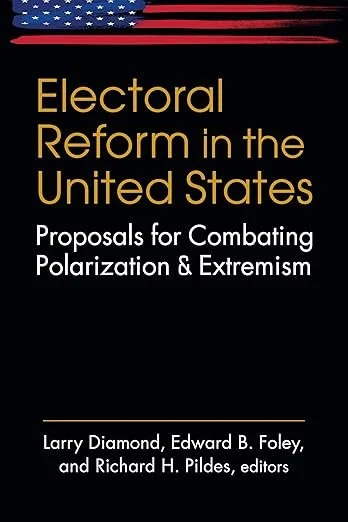
by Larry Diamond (Editor), Edward B. Foley (Editor), Richard H. Pildes (Editor)
In the midst of the political ugliness that has become part of our everyday reality, are there steps that can be taken to counter polarization and extremism―practical steps that are acceptable across the political spectrum? To answer that question, starting from the premise that the way our political processes are designed inevitably creates incentives for certain styles of politics and candidates, the Task Force on American Electoral Reform spent two years exploring alternative ideas for reforming key aspects of the US electoral process. The results of their work are presented in this essential book.
CONTENTS:
The Electoral Reform Imperative―the Editors.
Ballot Structures―E.B. Foley.
Proportional Representation―L. Drutman.
Why Proportional Representation Could Make Things Worse―R.H. Pildes
Primary Elections―R.G. Boatright
Presidential Nominations―R.H. Pildes and F. Lee.
Campaign Finance―R. La Raja.
Conclusion―the Editors.
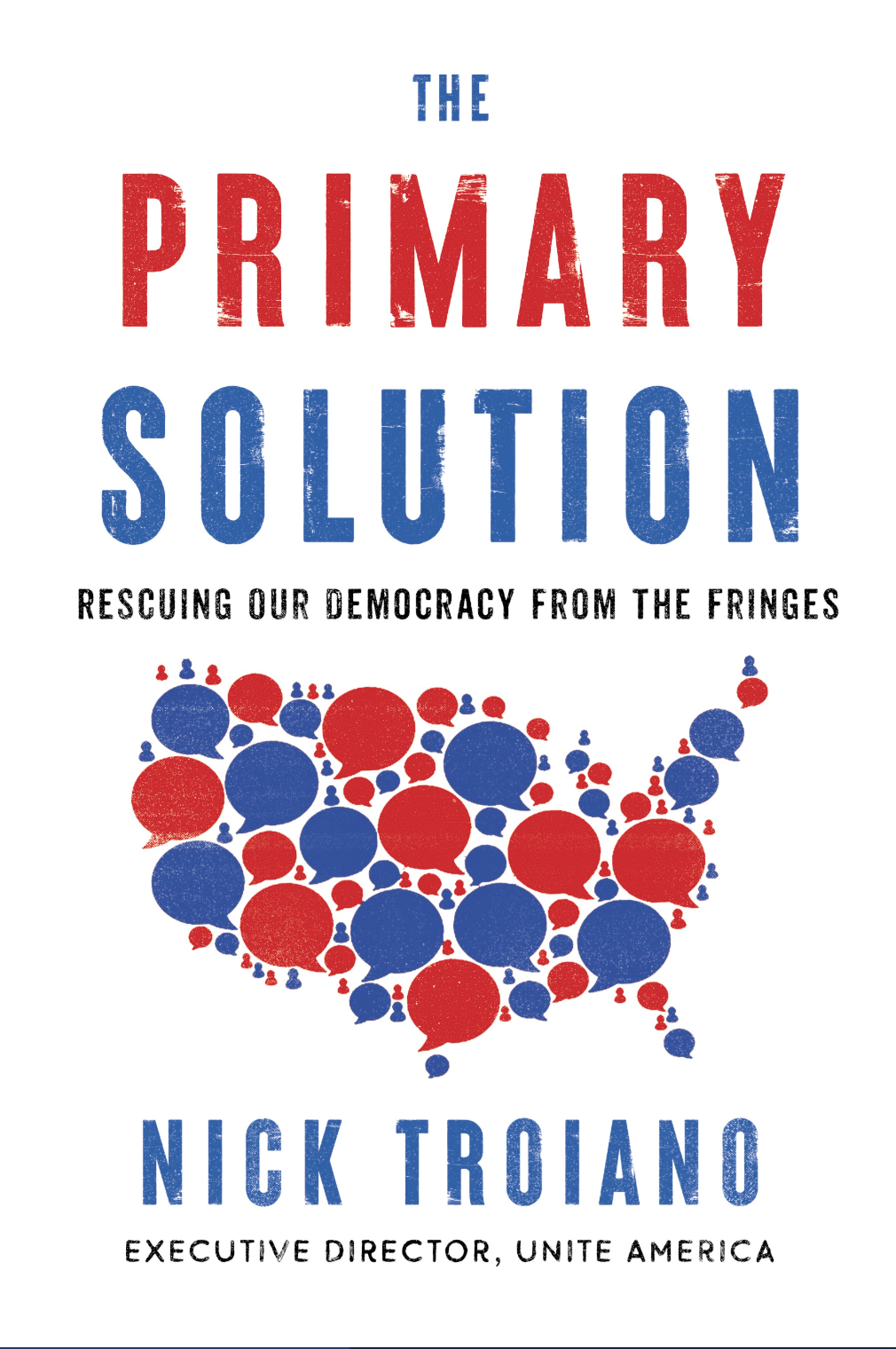
by Nick Troiano
Congress has become an unproductive and unaccountable mess. Polls show that only twenty percent of Americans think it’s doing a good job—yet ninety percent of incumbents are reelected. This shocking discrepancy is a natural outcome of our system of party primaries and their polarizing incentives.
Party primaries were invented over a century ago to democratize candidate nominations, but today their exclusionary rules and low turnout guarantee the exact opposite: only a small fraction of votes wind up deciding the vast majority of our elections. The result is a Congress that, rather than representing a majority of Americans, is instead beholden to the fringes of both major parties. This is the “primary problem” in our politics today. Fortunately, The Primary Solution “illuminates a powerful yet practical pathway out” (James Stavridis, Admiral, US Navy, Retired) and is “a must-read for anyone who wants a sane democracy” (Danielle Allen, author of Our Declaration).
Nick Troiano, founding executive director of Unite America, makes a bold proposal to abolish party primaries in our country. Doing so does not require a Constitutional amendment or an act of Congress. In fact, several states have already replaced party primaries with nonpartisan primaries that give all the voters the freedom to vote for any candidate in every election, regardless of party.
by Thom Reilly, Jacqueline S. Salit, and Omar H. Ali
Independent voters―the 40–50 percent of Americans who reject identification with either of the two major parties or with any party―are increasing in number and impact. Independents are determining the outcome of major elections, upending the long-held categories of political science. Drawing on historical and contemporary data (including survey data, participant observation, interviews, and current writings and scholarship) and providing timely new analysis, the authors argue that independents are an engine for a transformation of US democracy, perhaps even its saviors. Rather than “leaning” to a party or an ideology, independents vary on issues but share a deep distrust of the partisan system. What are the consequences of this distrust? What about shifting trends among Black, Latino, and Asian communities regarding party loyalty? What of young voters who eschew party identification wanting a different kind of political culture? For a wide variety of audiences, this book gives students, scholars, campaign professionals, activists, and media analysts an insight into current voting dynamics and future possibilities.
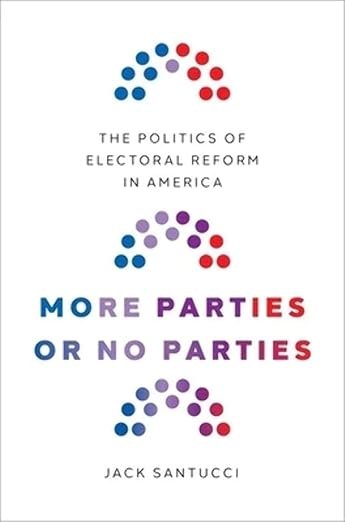
by Jack Santucci
Americans want electoral reforms so that they can have more choice in elections. Recent surveys show that 20 to 50 percent of Americans are open to a new electoral system, while demand for a third party has crept upward since Gallup began asking in 2003. More Americans now call themselves "independent" than identify with either of the major parties, but what happens when Americans try to reform their way out of a two-party system?
So far, demand for reform has found footing in a push for ranked-choice voting. In More Parties or No Parties, Jack Santucci traces the origins and performance of proportional representation in US cities, the reasons for repeal in all but one case, and discusses the implications of this history for current reform movements in US cities and states, as well as at the national level. In a two-party system, reform requires appealing to the group that wants to "get the parties out of politics" (or, in modern terms, to "reduce polarization"). This leads to ostensibly nonpartisan reform packages, yet party-like formations emerge anyway, as voters and governments need to be organized. However, such reform is not stable and has tended to make voting difficult for everyday people.
Introducing a new shifting-coalitions theory, Santucci argues that electoral reform is likely in periods of party-system instability. The players, according to this theory, are politicians and allied interest groups, motivated to get or keep control of government. Reform can be used to insulate a coalition, dislodge a coalition in power, or deal with noncommittal "centrists." The theory also suggests why reform happens, illuminates why reforms take the shapes that they do, and shows what it might take to make a government reform itself. Using roll-call, election, and other archival data, the book answers several questions: why electoral reforms were adopted, how they worked in practice, why they were repealed, and why only "ranked-choice" was considered in the first place. Drawing on extensive research in cities with experience of proportional representation, Santucci provides a timely and insightful theory of electoral reform with advice for the next generation of reformers.
by E.J. Dionne and Miles Rapoport
A timely and paradigm-shifting argument that all members of a democracy must participate in elections, by a leading political expert and Washington Post journalist
Americans are required to pay taxes, serve on juries, get their kids vaccinated, get driver’s licenses, and sometimes go to war for their country. So why not ask—or require—every American to vote?
In 100% Democracy, E.J. Dionne and Miles Rapoport argue that universal participation in our elections should be a cornerstone of our system. It would be the surest way to protect against voter suppression and the active disenfranchisement of a large share of our citizens. And it would create a system true to the Declaration of Independence’s aspirations by calling for a government based on the consent of all of the governed.
It’s not as radical or utopian as it sounds: in Australia, where everyone is required to vote (Australians can vote “none of the above,” but they have to show up), 91.9 percent of Australians voted in the last major election in 2019, versus 60.1 percent in America’s 2016 presidential race. Australia hosts voting-day parties and actively celebrates this key civic duty.
It is time for the United States to take a major leap forward and recognize voting as both a fundamental civil right and a solemn civic duty required of every eligible U.S. citizen.
by Lee Drutman
American democracy is at an impasse. After years of zero-sum partisan trench warfare, our political institutions are deteriorating. Our norms are collapsing. Democrats and Republicans no longer merely argue; they cut off contact with each other. In short, the two-party system is breaking our democracy, and driving us all crazy.
Deftly weaving together history, democratic theory, and cutting edge political science research, Drutman tells the story of how American politics became so toxic, why the country is trapped in a doom loop of escalating two-party warfare, and why it is destroying the shared sense of fairness and legitimacy on which democracy depends. He argues that the only way out is to have more partisanship-more parties, to short-circuit the zero-sum nature of binary partisan conflict. American democracy was once stable because the two parties held within them multiple factions, which made it possible to assemble flexible majorities and kept the temperature of political combat from overheating. But as conservative Southern Democrats and liberal Northeastern Republicans disappeared, partisan conflict flattened and pulled apart. Once the parties fully separated, toxic partisanship took over. With the two parties divided over competing visions of national identity, Democrats and Republicans no longer see each other as opponents, but as enemies. And the more the conflict escalates, the shakier our democracy feels.
Breaking the Two-Party Doom Loop makes a compelling case for large-scale electoral reform--importantly, reform not requiring a constitutional amendment-that would give America more parties, making American democracy more representative, more responsive, and ultimately more stable.
by Seth David Radwell
Two disparate Americas have always coexisted. In this thoroughly researched, engaging and ultimately hopeful story of our nation's divergent roots, Seth David Radwell clearly links the fascinating history of the two American Enlightenments to our raging political division. He also demonstrates that reasoned analysis and historical perspective are the only antidote to irrational political discourse.
"Did my vision of America ever exist at all, or was it but a myth?" Searching for a fresh and distinctive perspective on the recent corrosion of our civic life, Radwell's very personal and yet broadly shared question propelled his search back to our nation's founding for a fresh and distinctive perspective on the recent corrosion of our civic life - and led to a surprising discovery. Today's battles reflect the fundamentally divergent visions of our country that emerged at our nation's founding and have been vying for prominence ever since. The founding principles that shaped the United States may be rooted in the Enlightenment era. But the origin of our dual Americas is a product of two distinct Enlightenments - Radical and Moderate.
American Schism begins with a quick reintroduction to the pre-Enlightenment Middle Ages and then takes readers on an in-depth journey through the revolutionary Enlightenment period including the eventual schism that began in Europe but then found its way to American shores. Radwell shows the impact of this schism on American history from the early expansion of the U.S. through Jim Crow and The Age of Trumpism.
In an optimistic and rigorous final section, Radwell lays out an analysis of our current governmental structure and a plan to move forward, demonstrating that it is only by embracing Enlightenment principles that we can build a civilized, progressive, and tolerant society - where Americans can firmly ground their different views in rationality.
by Charlotte Alter
A new generation is stepping up. There are now twenty-six millennials in Congress--a fivefold increase gained in the 2018 midterms alone. They are governing Midwestern cities and college towns, running for city councils, and serving in state legislatures. They are acting urgently on climate change (because they are going to live it); they care deeply about student debt (because they have it); they are utilizing big tech but still want to regulate it (because they understand how it works). In The Ones We've Been Waiting For, TIME correspondent Charlotte Alter defines the class of young leaders who are remaking the nation--how grappling with 9/11 as teens, serving in Iraq and Afghanistan, occupying Wall Street and protesting with Black Lives Matter, and shouldering their way into a financially rigged political system has shaped the people who will govern the future.
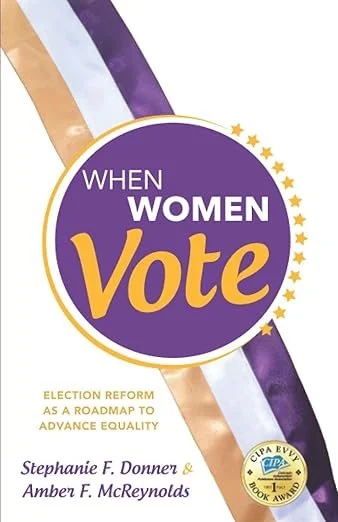
by Stephanie F. Donner and Amber F. McReynolds
When Women Vote highlights the challenges Americans, particularly women, face when trying to vote in the current voting system, and the amazing things that happen with reform. We make the case for further voting reform and for removing bias in the voting process by sharing stories and experiences of women voters and leaders throughout the United States.
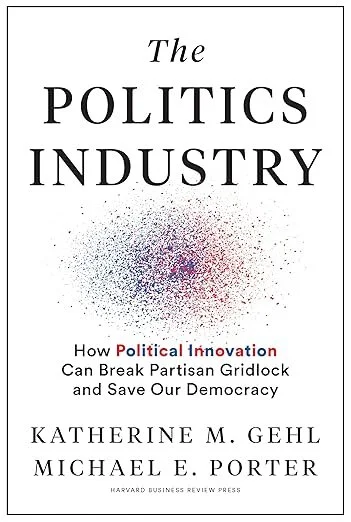
by Katherine M. Gehl and Michael E. Porter
The Politics Industry is an original and completely nonpartisan guide that will open your eyes to the true dynamics and profound challenges of the American political system and provide real solutions for reshaping the system for the benefit of all.
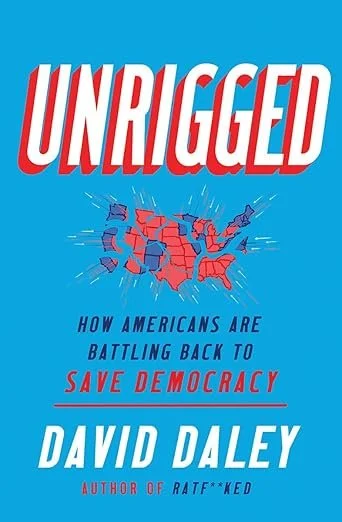
by David Daley
Following Ratf**ked, his “extraordinary timely and undeniably important” (New York Times Book Review) exposé of how a small cadre of Republican operatives rigged American elections, David Daley emerged as one of the nation’s leading authorities on gerrymandering. In Unrigged, he charts a vibrant political movement that is rising in the wake of his and other reporters’ revelations. With his trademark journalistic rigor and narrative flair, Daley reports on Pennsylvania’s dramatic defeat of a gerrymander using the research of ingenious mathematicians and the Michigan millennial who launched a statewide redistricting revolution with a Facebook post. He tells the stories of activist groups that paved the way for 2018’s historic blue wave and won crucial battles for voting rights in Florida, Maine, Utah, and nationwide. In an age of polarization, Unrigged offers a vivid portrait of a nation transformed by a new civic awakening, and provides a blueprint for what must be done to keep American democracy afloat.
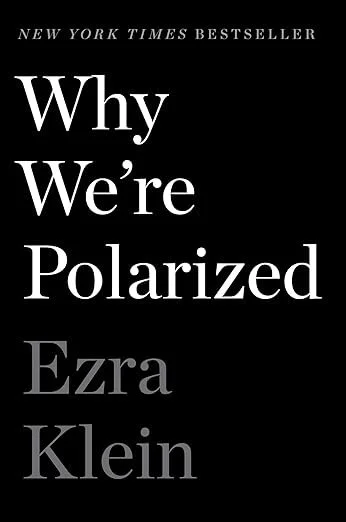
by Ezra Klein
Klein shows how and why American politics polarized around identity in the 20th century, and what that polarization did to the way we see the world and one another. And he traces the feedback loops between polarized political identities and polarized political institutions that are driving our system toward crisis.
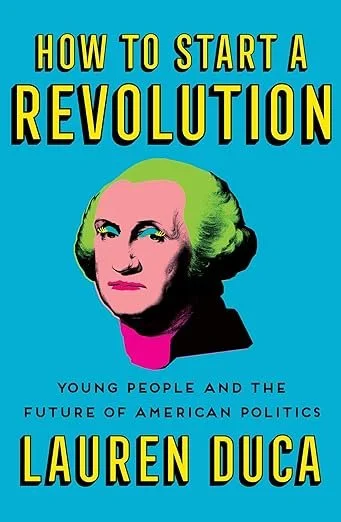
by Lauren Duca
A columnist at Teen Vogue, Lauren Duca has become a fresh and authoritative voice on the experience of millennials in today’s society. In these pages she explores the post-Trump political awakening and lays the groundwork for a re-democratizing moment as it might be built out of the untapped potential of young people.
Duca investigates and explains the issues at the root of our ailing political system and reimagines what an equitable democracy would look like. It begins with young people getting involved. People like Alexandria Ocasio-Cortez, the youngest woman ever to be elected to Congress; David and Lauren Hogg, two survivors of the Parkland, Florida shooting who went on to become advocates for gun control; Amanda Litman, who founded the nonprofit organization Run For Something, to assist progressive young people in down ballot elections; and many more.
Called “the millennial feminist warrior queen of social media” by Ariel Levy and “a national newsmaker” by The New York Times, Dan Rather agrees “we need fresh, intelligent, and creative voices—like Lauren’s—now as much—perhaps more—than ever before.” Here, Duca combines extensive research and first-person reporting to track her generation’s shift from political alienation to political participation. Throughout, she also draws on her own story as a young woman catapulted to the front lines of the political conversation (all while figuring out how to deal with her Trump-supporting parents).
by Eric Liu
In this age of epic political turbulence, citizens everywhere are organizing to claim their power. Do you understand what power truly is, how it flows, who has it, and how you can exercise it? This incisive, inspiring, and provocative book from Citizen University founder Eric Liu offers the answers.
Using examples from the left and right, past and present, he reveals the core laws of civic power. He shows that all of us can generate power—and then, step by step, he shows us how. The strategies of reform and revolution Liu lays out will help every reader make sense of our world today. If you want to be more than a spectator in this new era, you need to read this book.
by David Daley
Lauded as a “compelling” (The New Yorker) and “eye-opening tour of a process that many Americans never see” (Washington Post), David Daley’s Ratf**ked documents the effort of Republican legislators and political operatives to hack American democracy through an audacious redistricting plan called REDMAP. Since the revolutionary election of Barack Obama, a group of GOP strategists has devised a way to flood state races with a gold rush of dark money, made possible by Citizens United, in order to completely reshape Congress―and our democracy itself. “Sobering and convincing” (New York Review of Books), Ratf**ked shows how this program has radically altered America’s electoral map and created a firewall in the House, insulating the Republican party and its wealthy donors from popular democracy. While exhausted voters recover from a grueling presidential election, a new Afterword from the author explores the latest intense efforts by both parties, who are already preparing for the next redistricting cycle in 2020.
by Charles Wheelan
From debt ceiling standoffs to single-digit Congress approval ratings, America’s political system has never been more polarized—or paralyzed—than it is today. As best-selling author and public policy expert Charles Wheelan writes, now is the time for a pragmatic Centrist party that will identify and embrace the best Democratic and Republican ideals, moving us forward on the most urgent issues for our nation.